Glass Beach California: The Bizarre Story of a Trash Dump Turned into a Stunning Coastal Attraction
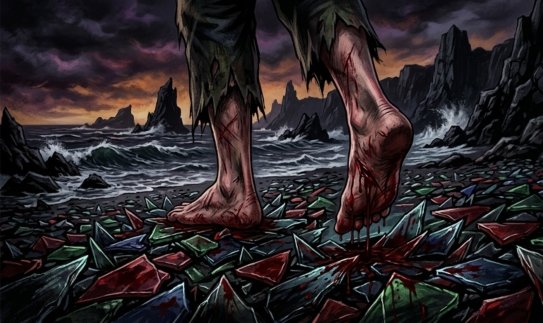
Imagine walking along a beach where the ground beneath your feet isn’t made of sand or ordinary pebbles, but countless pieces of glass. It sounds like something straight out of a torture-porn movie, or another twisted challenge dreamed up by Jigsaw in the “Saw” franchise: shattered glass, blood, and plenty of screaming.
But on the northern coast of California, a beach where colorful pieces of glass have been smoothed by the ocean over decades creates one of the world’s most unusual and photogenic shorelines. The sea didn’t simply reshape the glass; it turned discarded waste into something that looks almost like art. This unusual destination is known as Glass Beach, and it’s located near the coastal town of Fort Bragg.
The story behind Glass Beach is exactly the kind of history that sounds like an urban legend, except that it’s entirely true: for decades, a town used the ocean as a dumping ground. Over time, nature transformed much of that waste into a colorful coastal attraction. But is there still something unsettling about this place that makes it a pretty scary beach? And what should visitors know before heading there?
What Is Glass Beach in California?
Glass Beach is located next to MacKerricher State Park, near Fort Bragg in Mendocino County, Northern California. The town lies roughly 170 miles (274 km) north of San Francisco, along the famous Pacific Coast Highway (Highway 1).
Three historic dumping sites in the Fort Bragg area are often associated with Glass Beach. The northernmost and best-known section, commonly called Glass Beach #3, is the one most visitors come to see. It is accessible from the coastal trail and is part of MacKerricher State Park.
What makes this beach so unusual is the sea glass scattered across its shoreline. The pieces come in different colors, including green, amber, white, and occasionally blue or red. Years of waves, sand, and rocks have worn down the sharp edges, leaving behind small, smooth, frosted fragments that sparkle when the sunlight hits them.
One important detail, though: Glass Beach doesn’t look quite as spectacular as some of the older photographs suggest. The amount of glass has decreased over the years, partly because visitors used to take pieces home. Today, much of what remains is small and mixed in with ordinary beach gravel. It’s still a fascinating sight, but don’t expect an entire shoreline covered in thick layers of colorful glass.
Original horror apparel, posters, stickers & home décor.
New horror designs are added regularly.
The History of Glass Beach California: When the Ocean Became a Garbage Dump
The story began in 1906, when residents of Fort Bragg established a dumping site behind the Union Lumber Company. The location, now known as Site 1, was used to dispose of household waste directly along the coast.
This wasn’t an unusual practice at the time. Many coastal communities treated the ocean as an endless garbage disposal system, throwing away everything from bottles and household appliances to old vehicles. The sea was vast, and people largely assumed it could swallow whatever they threw into it. Locals referred to the area as “The Dumps.” Fires were sometimes set to reduce the volume of accumulated waste, but the amount of rubbish kept growing.
When Site 1 became full in 1943, the dumping operation moved to a second location, now known as Site 2. That site remained in use until 1949, when it too reached capacity. The dumping ground was then moved farther north, to what is now known as Site 3 — the section that eventually became famous as Glass Beach.
For decades, bottles, cans, kitchen appliances, furniture, batteries, and even old cars were discarded along this stretch of the California coastline. At some point, restrictions were introduced on certain types of waste, but the dumping continued until the entire practice was finally brought to an end.

When Nature Takes Over
In 1967, local authorities and the North Coast Regional Water Quality Control Board shut down the dumping operation. Various cleanup efforts followed over the years, removing larger objects and other waste that could be collected or recycled. Some of the remaining metal was sold for scrap or reused in art projects.
But the ocean had already begun its own transformation. Organic materials gradually decomposed, while much of the metal and other debris was eventually removed. Glass and pottery, however, were different. They didn’t simply disappear. Instead, waves repeatedly broke them apart and rolled the fragments against sand, rocks, and one another.
Over many years, this constant movement gradually wore away the sharp edges. The fragments became smaller, smoother, and more rounded, developing the frosted appearance associated with sea glass. This is how the unusual shoreline was created: not through a geological miracle, but through decades of natural erosion acting on human-made waste.

What Is Beach Glass, and How Is Sea Glass Formed?
The terms “beach glass” and “sea glass” are often used interchangeably, although they can describe slightly different things. Beach glass generally refers to discarded glass that has been weathered and polished after spending time on a beach, while sea glass usually refers to glass shaped by seawater and waves.
So, how is beach glass made? The process begins when glass enters the water, often after a bottle, jar, or other glass object breaks. Waves move the fragments around, pushing them against sand, pebbles, and rocks. This repeated abrasion gradually removes the sharp edges and gives the glass its smooth, rounded shape. The surface also becomes cloudy and frosted through prolonged exposure to seawater and weathering. The process can take many years, and the final appearance depends on the type of glass, its original color, and how long it has been exposed to the elements.
At Glass Beach, this process took place on a remarkable scale. What began as an environmental disaster eventually produced a shoreline filled with thousands of tiny, colorful fragments.
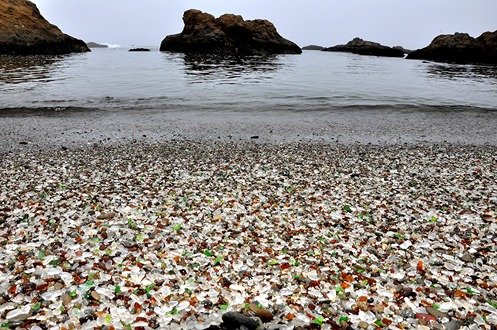
In 2002, California State Parks incorporated the property into MacKerricher State Park following a cleanup and conservation process. The area is now protected, and visitors can explore its unusual shoreline while also enjoying the surrounding coastal environment.
The wider area is home to tide pools, where visitors may spot crabs, mollusks, algae, and other marine life. The coastline also provides habitat for seabirds and marine mammals, including harbor seals and sea lions. In other words, Glass Beach is more than a strange collection of colorful pebbles: it’s part of a much larger coastal ecosystem.

The Creepy Side of Glass Beach: When Paradise Turns into a Hazard
Glass Beach may look like an unusual paradise, but that doesn’t mean every part of it is easy or safe to explore.
The main public access area is relatively straightforward to reach, but the shoreline itself is rocky and uneven. Some of the smaller coves require navigating rough paths and descending over rocks. These sections can be difficult for visitors with limited mobility, and they are not suitable for wheelchairs or strollers.
The ocean presents another risk. The Pacific coast can experience powerful surf and sudden waves that sometimes reach farther up the shore than visitors expect. Even when the water looks relatively calm, a so-called sneaker wave can catch people off guard. Keep a safe distance from the water, check the tide conditions, and never turn your back on the ocean.
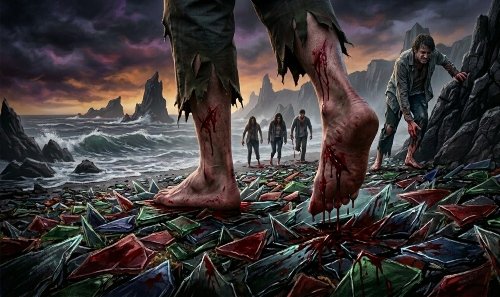
The area also shows remnants of its industrial and dumping history. Although cleanup efforts removed much of the larger debris, visitors should not assume that every object along the shoreline is harmless. Sharp fragments and uneven rocks are still possible, so sturdy footwear is a sensible choice.
The beach is sometimes described in dramatic terms by people who focus on its environmental history and difficult coastal terrain. But the biggest risks are fairly ordinary: slippery rocks, unstable footing, strong waves, and trying to reach sections that aren’t easily accessible.
Glass Beach Today: Visiting the Place Where Trash Became Treasure
Glass Beach is now one of the best-known attractions along the Mendocino Coast. Visitors come to photograph the colorful fragments, explore the rocky shoreline, and learn about the beach’s unusual history.
Where Is Glass Beach Located, and How Do You Get There?
Glass Beach is located in Fort Bragg, California, within MacKerricher State Park. The easiest way to reach it is to drive along Highway 1 and head toward the western end of Elm Street.
A small parking area is located near the end of Elm Street, close to the intersection with Glass Beach Drive. From there, visitors can follow the coastal path toward the beach.
The northern section, Site 3, is generally the most accessible and the one most people visit. The other historic dumping locations, Sites 1 and 2, are farther south and involve different access points and more challenging terrain.
If you’re planning a visit, it’s worth checking the local tide tables in advance. Low tide is generally the best time to explore the shoreline and look more closely at the sea glass. Wear shoes with good grip, bring a jacket, and remember that coastal weather can be windy and foggy even during the warmer months.
Don’t Take the Glass Home
One of the most important rules at Glass Beach California is also one of the simplest: you may not collect or remove the glass.
It may be tempting to put a few colorful pieces in your pocket as souvenirs. After all, taking just one or two fragments might not seem like a big deal. But thousands of visitors thinking the same way can seriously impact a place like this.
Over the years, tourist collecting has contributed to the decline in the amount of sea glass left on the shoreline. The natural process that creates new sea glass is extremely slow, and the remaining pieces are part of the site’s historical and environmental value.
The official message is simple: take photographs, enjoy the view, and leave the glass where it is. The goal is to preserve what’s left for future visitors.
Interestingly, less accessible historic sites may still contain more glass than the main public beach, but that doesn’t make them suitable places to collect or explore beyond designated access routes.
Is Glass Beach California Worth Visiting?
Glass Beach may not be the most terrifying place on Earth. Jigsaw would probably be disappointed: there isn’t enough blood, and there’s far too much beautiful scenery. But something about the story behind it is genuinely unsettling. A town dumped its rubbish into the ocean for more than six decades, and the result eventually became a tourist attraction. People now travel from around the world to admire the beauty created by an environmental disaster.
It’s a strange reminder of how nature can transform the damage we cause, without necessarily undoing it. The glass may look like a collection of tiny jewels, but every fragment tells a story about a time when the ocean was treated as an endless dumping ground. The cycle, it seems, never really ends. It simply changes shape.