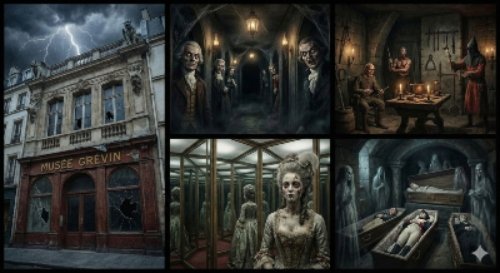
Grévin Museum in Paris: Wax Figures, Dark History & a Touch of the Macabre
We’ve written quite a bit about wax museums around the world, including horror films that revolve around wax figures. There’s something inherently creepy about these lifelike figures, especially when they come to life. While most wax museums aren’t specifically focused on horror, some feature famous horror characters and villains, alongside attractions such as haunted mazes and themed rides.
The Grévin Museum in Paris, known in French as the Musée Grévin, is the city’s best-known wax museum. It is not quite the same as Madame Tussauds, and judging by its collection, it is not particularly frightening either. Still, this long-established attraction in Paris’s 9th arrondissement has an atmosphere that can feel a little uncanny. It is a place where the boundaries between past and present, reality and imagination, sometimes seem surprisingly thin.
Part of that atmosphere comes from the museum’s darker historical displays, including a reconstruction of the murder of Jean-Paul Marat. The museum also hosts special events throughout the year, including Halloween-themed evenings that may appeal to horror fans.
So, if you’re looking for a Paris attraction that combines history, popular culture, and a touch of the macabre, the Grévin Museum may be worth adding to your itinerary. Here’s everything you need to know before visiting.
What Is the Grévin Museum in Paris?
The Grévin Museum (Musée Grévin) is a wax museum in Paris and one of Europe’s oldest attractions of its kind. It displays more than 250 wax figures representing famous people from a wide range of fields, including history, politics, art, cinema, sports and music.
As you would expect from a traditional wax museum, visitors can get up close to the figures, take photographs with them and enjoy the illusion of meeting celebrities and historical personalities in person. Each figure is displayed in a setting designed to reflect its subject, sometimes recreating a particular moment or scene in considerable detail.
The museum also offers several additional attractions, including a Hall of Mirrors and a theatre where visitors may encounter magic performances and other special entertainment.
Buy Entrance Ticket for Grévin Museum Here
Original horror apparel, posters, stickers & home décor.
New horror designs are added regularly.
The History of the Grévin Museum
The story of the Grévin Museum dates back to the 19th century. It officially opened its doors on June 5, 1882, following an idea conceived by Arthur Meyer, a French newspaper publisher and journalist.
At the time, Meyer was the director of the daily newspaper Le Gaulois. Photography was still in its early stages and was not yet widely used in the press. Meyer wanted to give readers a chance to see three-dimensional representations of the people they read about in the news.
To bring his idea to life, he enlisted Alfred Grévin, a well-known caricaturist, illustrator and theatre costume designer. Grévin became so closely associated with the project that the museum eventually took his name. His political caricatures were particularly famous, and some were known for their sharp, biting humor.
Meyer’s vision was relatively simple: he wanted to bring to life the people who appeared in his newspaper and in Grévin’s illustrations. At a time when television and the internet did not exist, a wax museum offered the public an unusual opportunity to get close to personalities who otherwise seemed larger than life. Meyer had also visited Madame Tussauds in London and was impressed by the experience.
The Paris museum opened in an elaborate building on Boulevard Montmartre, where it remains today. It quickly became a major success. In the early 20th century, visitors included celebrated artists such as Pablo Picasso and Salvador Dalí.
Over the years, the museum has undergone several renovations and expansions, while retaining much of the charm and atmosphere of a traditional wax museum. The building itself is an architectural attraction, with richly decorated halls, Belle Époque details, mirrors, and ornate interiors that contribute to its almost dreamlike atmosphere.
Modern features have also been introduced over time, including interactive displays and multimedia experiences. Nevertheless, the museum’s central idea remains the same: creating memorable encounters with the people who have shaped history and popular culture, at least in wax.
The Grévin name has also been associated with wax museums outside Paris. The Grévin Museum in Montreal, for example, closed permanently in September 2021. The Seoul museum has also been listed as temporarily closed, so it should not be regarded as a currently operating branch.
The Grévin Museum and the Early History of Animation
The museum also has an important place in the history of cinema and animation.
On October 28, 1892, French inventor and filmmaker Émile Reynaud presented his Pantomimes Lumineuses at the Grévin Museum. These were short animated sequences created using his invention, the Théâtre Optique (Optical Theatre). The program included three works: Un bon bock (A Good Beer), Le Clown et ses chiens (The Clown and His Dogs) and Pauvre Pierrot (Poor Pierrot).
The presentation is considered a landmark in the history of animation. Unlike later films made using photographic footage, Reynaud’s sequences consisted of hand-painted images projected onto a screen. The shows continued at the museum until 1900, attracting more than half a million spectators.
October 28 is now celebrated as International Animation Day, commemorating Reynaud’s pioneering public presentation.

What Can You See at the Grévin Museum?
The Grévin Museum boasts a diverse collection of more than 250 wax figures. Over its history, it has created and displayed more than 2,000 figures, with the collection changing over time based on artistic developments, public interest, and current events.
Some of the museum’s older figures and historical scenes have been part of its collection for generations. These include displays connected to the French Revolution and the Napoleonic era, which reflect the museum’s origins in the late 19th and early 20th centuries.
The figures are arranged in themed settings, with some displays recreating significant moments from the lives of the people represented. Different rooms take visitors through various periods, places, and subjects. Among the museum’s main spaces are:
✅ The Hall of Columns: An impressive entrance hall featuring ornate golden columns and figures representing historical personalities.
✅ The Grand Staircase: A staircase connecting different areas of the museum, with several figures displayed along the way.
✅ The Hall of Mirrors: A spectacular room filled with mirrors and decorative artwork. It also hosts special exhibitions and events.
✅ Themed Rooms: Different spaces dedicated to subjects such as theatre and performing arts, sports, science, and world leaders.
✅ The Grand Paris Avenue: A recreation of a traditional Parisian street, featuring figures associated with French culture and everyday life.
One thing to keep in mind is that many of the figures represent French celebrities, politicians, and historical personalities who may be less familiar to international visitors. We’ve highlighted some of the better-known names below, but you and your children may not recognize every figure in the collection.
Historical Figures
The museum features an extensive collection of personalities who helped shape French and world history. Visitors may encounter figures such as Napoleon Bonaparte, Marie Antoinette, Louis XIV, Charlemagne and former French president Charles de Gaulle.
The collection has also been updated over the years to include more recent political figures. Nicolas Sarkozy, for example, joined the museum in 2007, while former Canadian prime minister Justin Trudeau has also been represented.
Film and Entertainment Stars
The Grévin Museum features a wide range of film, television and theatre personalities, from classic Hollywood icons to contemporary stars.
Among the figures that have appeared in the museum are Marilyn Monroe in her famous white dress, Audrey Hepburn, Meryl Streep, Donald Sutherland, Brad Pitt, Leonardo DiCaprio, Johnny Depp, Ryan Reynolds, Bruce Willis, Scarlett Johansson, Dwayne Johnson (better known as The Rock) and Angelina Jolie.
French cinema is also represented, with stars such as Marion Cotillard and Omar Sy. Some displays recreate iconic scenes or moments from famous films and performances.
The collection changes over time, so it is worth checking the museum’s official list of personalities before your visit if there is a particular celebrity you hope to see.
Musicians and Singers
Music also has a prominent place in the museum. Its collection includes figures such as Michael Jackson, Elvis Presley, Jimi Hendrix, Madonna, Beyoncé, Katy Perry, David Bowie, and Lady Gaga, alongside French music legends such as Édith Piaf and Jacques Brel.
The figures are generally displayed in outfits associated with their public image or musical careers, sometimes within settings that evoke some of their most famous performances.
Athletes
Sports fans can also find plenty of familiar faces. The museum has featured football legends such as Pelé, Lionel Messi, Cristiano Ronaldo, Kylian Mbappé and Zlatan Ibrahimović.
Other sporting personalities represented in the collection include French basketball player Tony Parker, judoka Teddy Riner, and athletes from various disciplines.
World Leaders and Public Figures
The museum also pays tribute to influential political leaders and public figures from recent decades. Among the personalities represented are Nelson Mandela, Mahatma Gandhi, and Princess Diana.
Scientists and Intellectuals
The worlds of science and literature are represented by figures such as Albert Einstein and Victor Hugo, among other influential thinkers and writers.
Artists
The museum also celebrates artists who have left their mark on history and culture. Its figures have included Vincent van Gogh (whose life story could easily inspire a horror film), Leonardo da Vinci and Andy Warhol.
Characters for Children
You won’t find dozens of figures that every child will immediately recognize, especially if they are not familiar with French popular culture. However, the museum has featured several characters that younger visitors may enjoy.
These include characters from PAW Patrol, Miraculous: Tales of Ladybug & Cat Noir, Scrat from the Ice Age films, The Little Prince and Obelix, the famous character from the Asterix comic-book series. Obelix is also associated with Parc Astérix, a theme park located outside Paris.

Fashion Icons
Fashion also has its place in the collection. Visitors may encounter legendary designers such as Jean Paul Gaultier and Christian Dior, alongside models such as Cara Delevingne.
The One Piece Experience at the Grévin Museum
One of the museum’s most significant recent additions is its dedicated One Piece area, which opened on June 26, 2026.
The experience features ten life-size statues of the Straw Hat Crew from the hugely popular Japanese manga and anime series. The main character, Monkey D. Luffy, appears alongside his crew in an immersive space covering approximately 80 square meters.
The figures were created in Japan under the supervision of Toei Animation and the Grévin Museum. The setting, named the Cabaret du Soleil, draws inspiration from the atmosphere of a Parisian cabaret and combines French and Japanese creative influences.
This is a particularly interesting addition because the Straw Hat Crew are the first characters from a Japanese animated series to be displayed at the Grévin Museum. Visitors can take photographs alongside the characters and explore a dedicated environment designed especially for the experience.
If you are a fan of One Piece, this is a good reason to consider adding the museum to your Paris itinerary. The museum also offers special ticket options connected to the experience, so check the official One Piece information and ticket page before booking.

How Realistic Are the Wax Figures at the Grévin Museum?
In our view, the craftsmanship behind the museum’s wax figures is impressive. Some of the sculptures look remarkably lifelike, with attention paid to even the smallest details of each person’s appearance.
Creating a wax figure involves hundreds of hours of work. The process begins with measurements and photographs, followed by creating an initial model, usually sculpted in clay. The figure is then produced in wax, painted and finished by hand. The final stages can take months, depending on the sculpture’s complexity. However, the museum has also experienced a few high-profile controversies over the accuracy of its figures.
In 2023, the Grévin Museum proudly unveiled a wax figure of actor and former professional wrestler Dwayne Johnson, better known as The Rock. The unveiling quickly attracted criticism on social media because the figure did not look much like the star. One of the biggest complaints concerned the skin tone, which appeared significantly lighter than Johnson’s actual complexion. Johnson himself joined the criticism, asking the museum to update his wax figure and pay particular attention to his skin color. Following the backlash, the museum adjusted the sculpture, darkening its complexion.
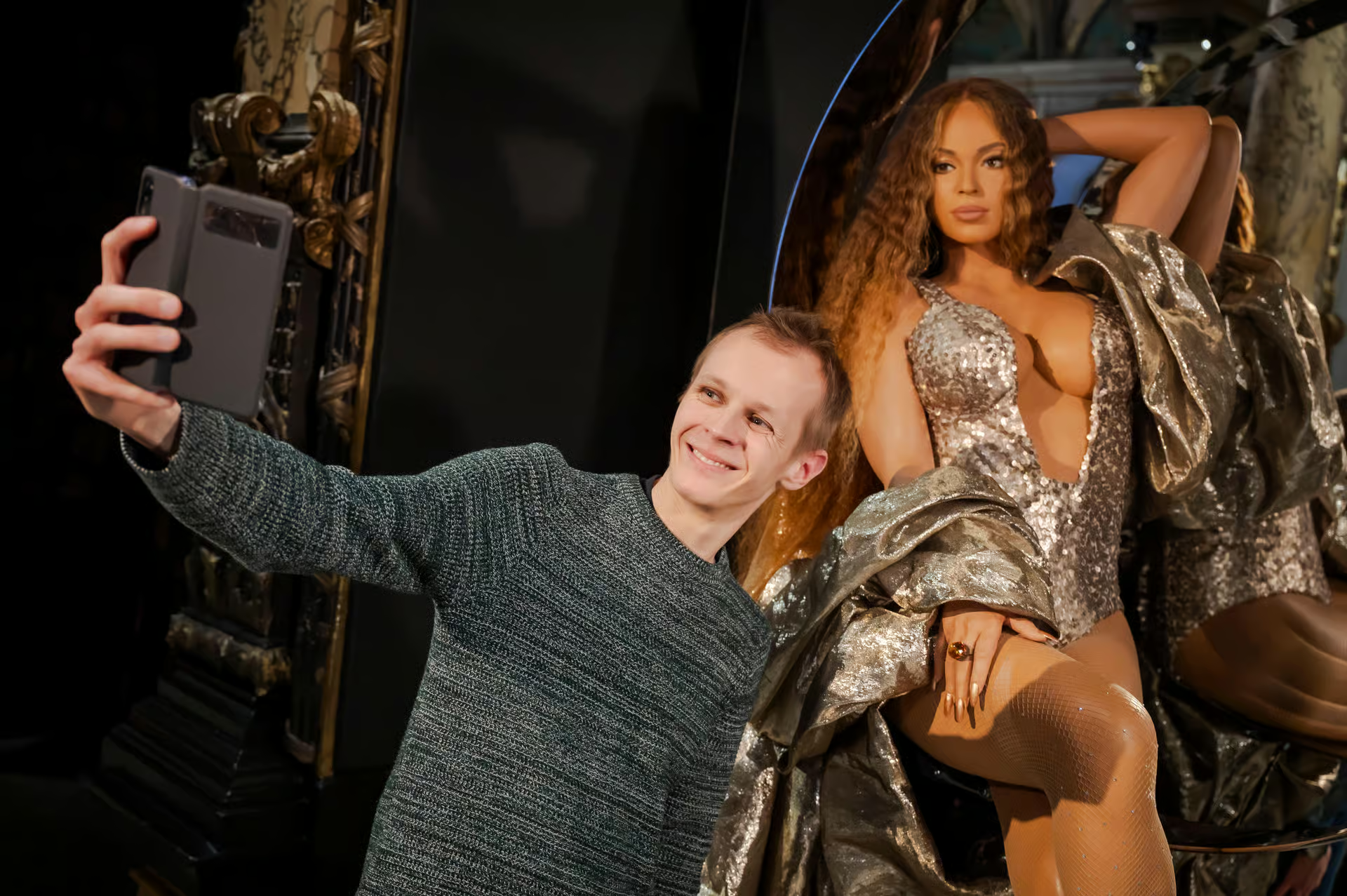
In July 2024, the museum unveiled a wax figure of pop superstar Beyoncé. The outfit and hairstyle attracted some positive comments, but the face was widely criticized for not resembling the singer. The skin tone also became a subject of debate. One website described the figure as looking somewhat like a haunted Shakira doll. We could not find reliable information confirming whether the museum subsequently made changes to the sculpture to improve its resemblance to Beyoncé.
Are There Any Scary Exhibits at the Grévin Museum?
Although the Grévin Museum is not officially a horror attraction, a few elements may create a sense of unease or send a shiver down your spine.
Dark Historical Scenes
One of the museum’s most fascinating and disturbing displays is its reconstruction of the murder of Jean-Paul Marat in 1793.
Marat was a leading figure of the French Revolution. A physician, physicist, journalist, and politician, he was known for his inflammatory articles and passionate speeches. He also became closely associated with the Reign of Terror during the Revolution.
Marat suffered from a chronic skin condition and often spent time in a medicinal bath to relieve his symptoms. On July 13, 1793, he was murdered while in his bath by Charlotte Corday, a supporter of the Girondin faction. Corday claimed to have acted alone and famously justified the killing by saying that she had killed one man to save 100,000. She was executed a few days later.
The assassination caused considerable turmoil among the radical Jacobins and became one of the defining events of the French Revolution. It also contributed to the increasingly violent political climate of the period.
The wax display is particularly striking because it recreates the scene in considerable detail. The museum’s presentation includes objects associated with the murder, including the bath and knife traditionally identified with the event. The scene is based on Jacques-Louis David’s famous painting The Death of Marat.
It is not frightening in the traditional haunted-house sense, but it is certainly macabre and unsettling. The combination of historical detail, lifelike figures, and the violent circumstances of Marat’s death creates a rather disturbing experience.
Halloween Events at the Museum
Around Halloween, the Grévin Museum sometimes offers special evening events and themed experiences that transform the attraction’s atmosphere. These events may include extended opening hours, performers dressed in frightening costumes, actors moving among the wax figures, and special effects designed to make the museum feel a little more sinister.
The contrast between the motionless wax figures and the living performers can be particularly effective, blurring the line between what is alive and what is not. It may even remind horror fans of classic films about wax museums. Depending on the program, visitors may also encounter atmospheric lighting, sound effects, music, and themed photo opportunities.
The museum’s Halloween program changes from year to year, so check its official news and events page for the dates and details of upcoming events. The museum also runs other special evening experiences during the year, including Night at the Museum, featuring performers, special effects and activities after regular opening hours.
What Should You Know Before Visiting the Grévin Museum?
Grévin Museum Opening Hours
The Grévin Museum is open year-round, including Sundays and public holidays. However, its opening hours vary depending on the date, season, and special events.
On a typical day, the museum may open at around 10:00 AM and close at 6:00 PM, with the last admission usually one hour before closing. During busy periods and special events, opening hours may be extended.
Halloween events and other evening programs can also involve later opening times, sometimes extending well into the night.
There is no single opening-hours schedule that applies throughout the year. Before visiting, check the museum’s official opening-hours calendar to confirm the times for your chosen date.
Where Can You Buy Grévin Museum Tickets?
There are several ways to purchase tickets for the Grévin Museum:
🎟️ At the museum ticket office: You can buy tickets when you arrive. However, during busy periods, you may have to wait, and availability may be limited.
🎟️ Through online booking platforms such as GetYourGuide, Viator and Tiqets: These platforms allow you to compare available options and book tickets in advance. Depending on the ticket and provider, you may also find packages that include other Paris attractions.
🎟️ Through the official Grévin Museum website: You can purchase tickets directly from the museum. This is a useful option if you want to check the latest ticket types, prices, and special offers.
Grévin Museum Ticket Prices
The museum offers different ticket options, and prices depend on the ticket type and your visit date.
At the time of writing, the official website lists the following prices for its flexible, undated tickets:
- Adult ticket: €28
- Child ticket (ages 5–18): €19.80
- Children under 5: Free admission
Undated tickets are valid for 365 days from the date of purchase and do not require you to reserve a specific time slot. They are not valid for special events.
Dated tickets may be cheaper, but the museum uses dynamic pricing. The final price depends on your visit date, school holidays, public holidays, visitor demand, and other factors.
Prices and offers can change, so it is best to check the official Grévin Museum ticket page before making a purchase.
Why Consider Booking Online?
Booking online can make planning your visit easier, particularly if you are traveling during a busy period.
✅ Convenience: You can purchase your tickets in advance and keep the confirmation on your phone. You don’t need to print anything unless the provider specifically asks you to.
✅ Clear pricing: You can see the price and ticket conditions before completing your purchase.
✅ More options: Booking platforms sometimes offer combined tickets that include the Grévin Museum and other attractions in Paris.
✅ Flexible cancellation options: Some third-party tickets offer free cancellation, but this depends on the specific ticket. Always read the cancellation policy before booking.
One important point: buying a ticket online does not automatically mean you can skip every queue. According to the museum’s official FAQ, online tickets do not guarantee priority entry, and visitors may still have to wait outside during busy periods or at security.
Grévin Museum Tickets: Is It Worth Booking in Advance?
If you are visiting Paris during school holidays, weekends or another busy period, booking ahead is a sensible idea. It lets you secure your preferred date and check available ticket options before you arrive.
If you are traveling with children, or simply want to avoid unnecessary uncertainty, having your tickets ready on your phone can make the day easier.
Our tip: Consider visiting early in the morning, shortly after the museum opens, or later in the afternoon. The museum itself recommends choosing the beginning or end of the opening day to avoid the busiest periods. You may also find it easier to take photographs without too many other visitors in the background.
You can compare available tickets and choose your preferred date and number of visitors here:
Buy Entrance Ticket for Grévin Museum Here
Combined Tickets: Save Money If You Plan to Visit More Attractions
If you are planning to visit several attractions in Paris, it may be worth looking at combined tickets.
Some options pair the Grévin Museum with a Seine River cruise, making for a pleasant day out for families. Other packages may include the Chocolate Museum or the Paris Aquarium. There are also broader sightseeing passes that include the Grévin Museum alongside several popular attractions around the city.
Depending on the package, combining attractions may offer savings compared with purchasing each ticket separately. However, the actual discount depends on the attractions included and the dates selected.
The main disadvantage is that combined tickets can be less flexible. Some packages require you to visit several attractions on the same day or within a limited period. That may not be ideal if you are arriving with young children or prefer a more relaxed pace.
If you are only interested in visiting the Grévin Museum, a regular admission ticket is probably the simplest option. But if you are planning a busy sightseeing day, it is worth comparing the available combinations.
Explore combined attraction tickets on Tiqets
Location and How to Get to the Grévin Museum
Address: 10 Boulevard Montmartre, 75009 Paris, France.
The Grévin Museum is centrally located in Paris, in an area known for its theatres, cafés, shops, and traditional Parisian atmosphere.
By Metro
The easiest way to reach the museum is by public transport.
- Metro lines 8 and 9: Get off at Grands Boulevards, the closest metro station.
- Metro line 3: Get off at Bourse.
Both stations are within a short walking distance of the museum.
By Bus
Paris has an extensive bus network, and several routes serve the surrounding area. Check the current RATP route planner before traveling, as routes and stops may change.
Parking
If you are arriving by car, keep in mind that the museum does not have its own dedicated parking facility.
Several paid car parks are available in the surrounding area, including the Indigo car park at 31B Rue Vivienne and other nearby facilities.
Parking in central Paris can be expensive, and finding an available space may be difficult, especially during busy periods. Public transport is generally the more convenient option.
Walking
If you are already exploring central Paris, the museum is within walking distance of several attractions.
The Opéra Garnier is relatively close, while the Louver is a little over a kilometer away. The museum is also well placed for exploring the surrounding shopping streets and the Grands Boulevards area.
General Tips for Visiting the Grévin Museum
How Much Time Should You Spend at the Grévin Museum?
An average visit to the Grévin Museum takes approximately 1.5 hours, according to the museum itself. However, you may want to allow closer to two hours if you plan to take plenty of photographs, read the information accompanying the displays, and explore the different themed areas at a relaxed pace.
Families with children may also want to allow some extra time, particularly if the younger visitors are interested in specific characters.
When Is the Best Time to Visit?
As with most popular attractions in Paris, the Grévin Museum can become crowded, particularly during weekends, public holidays and school vacations.
Weekdays are generally worth considering if you want a quieter visit. Early mornings and later afternoons may also be less busy than the middle of the day.
The museum itself recommends visiting at the beginning or towards the end of its opening hours. This can make it easier to enjoy the displays and take photographs without too many other visitors around.
Accessibility
Following its major renovation in 2001, the Grévin Museum became accessible to wheelchair users.
The museum provides wheelchair access, and visitors with specific accessibility requirements are advised to contact the museum in advance to confirm the arrangements for their visit.
Photography
One of the main attractions of a wax museum is the opportunity to take photographs with the figures.
The displays are designed to encourage visitors to pose alongside the celebrities and historical personalities, and photography is generally part of the experience. Bring a camera or phone with a fully charged battery and enough storage space.
Food and Drinks
The museum has had a small café where visitors could purchase drinks and light snacks. However, the café’s operating status may change, and it was reported as closed when this article was prepared.
In any case, eating inside the exhibition areas is not permitted. If you want to have a proper meal, you will find plenty of cafés and restaurants in the surrounding neighborhood.
Fear in the City of Lights: Paris' Darkest Attractions
🕳️ Paris Scary Tours
Get Your Guide |
Viator
🗼 Eiffel Tower Tickets and Tours
Get Your Guide |
Viator |
Tiqets
💀 Paris Catacombs, Cemeteries & Underground
Get Your Guide |
Tiqets
🎢 Disneyland Paris Tickets
Get Your Guide |
Viator |
Tiqets
⛴️ Seine River Cruises
Get Your Guide |
Viator |
Tiqets
🔐 Paris Escape Rooms
Get Your Guide |
Viator |
Tiqets
🎫 Paris City Cards and Attraction Passes
Get Your Guide |
Tiqets
Disclosure: Some of the links above are affiliate links. Purchasing through them may earn us a small commission at no extra cost to you — helping us keep the horror alive.