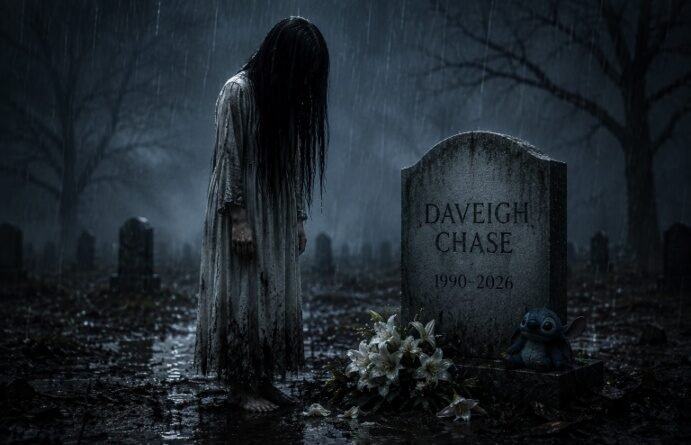
The Tragic Story of Daveigh Chase: The Girl Who Terrified US as Samara, Disappeared Like a Ghost, and Died at Just 35
Some horror actors are remembered for the nightmares they left behind in the minds of millions, even if those same viewers have no idea what their names are or what they actually look like. You may have come across their photographs in articles about “what horror stars look like in real life,” often highlighting the striking contrast between their terrifying on-screen characters and their much more ordinary appearances.
Daveigh Chase was exactly that kind of actress. She became famous in the early 2000s for her iconic role as Samara in “The Ring,” along with several other acclaimed films. But her career eventually came to a halt, and she gradually disappeared from the spotlight and, eventually, from the public radar altogether. On June 16, 2026, Chase died at the age of just 35 in a Los Angeles hospital.
Her story, however, began long before her death. After stepping away from acting, Chase faced a series of personal struggles, including legal troubles, addiction, homelessness, and a dramatic decline in her health. Years after her disappearance from public life, the circumstances surrounding her final years and her death brought renewed attention to a deeply tragic story.
Who Was Daveigh Chase?
As a child, Daveigh Chase was known as Samara from “The Ring,” but she was so much more than that. In a single year, a 12-year-old girl became both one of the most terrifying figures on screen and one of Disney’s warmest animated characters, lending her voice to Lilo in Lilo & Stitch. She was the ghost who made an entire generation afraid of television sets, and the voice of a little Hawaiian girl who taught us all how to say “Ohana.” Millions of people were frightened by her, laughed with her, and cried alongside her, without ever knowing the face behind the heavy makeup or the voice behind the beloved animated character.
Daveigh Elizabeth Chase was born in July 1990 in Las Vegas, Nevada. Her parents divorced when she was young, and Chase moved with her mother, Cathy, to Albany, Oregon, in the Willamette Valley. She eventually adopted her mother’s surname.
From an early age, she showed an interest in performing arts. She began taking dance and singing lessons at age three, participated in local talent shows and community events, and entered competitions, including one where she won a national singing contest. Her mother was initially hesitant about her young daughter’s ambitions, but soon recognized her talent.
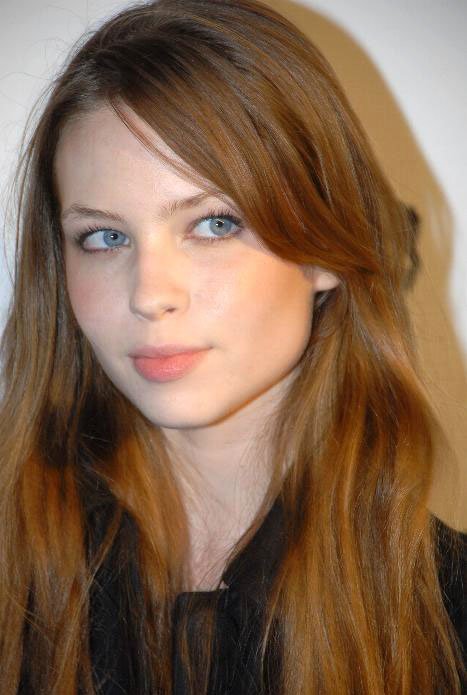
A major turning point came in 1998, when the family was involved in a car accident during a trip to Los Angeles. Cathy was unable to drive for approximately six months, and during the lengthy recovery period, the family moved to Southern California. By then, eight-year-old Daveigh Chase had developed a growing passion for acting. Her mother began homeschooling her, allowing her to attend auditions, and she eventually landed an agent who helped her secure several minor roles.
Her first guest appearance was on “Sabrina the Teenage Witch.” She went on to appear on television shows such as “Charmed” and “ER,” as well as the family television movie “Michael Landon, the Father I Knew.” Even at that age, Chase worked at a pace many adults might have struggled to maintain. But what came next was something else entirely.
Chase’s breakthrough came in 2001, when she was cast in a supporting role in the excellent independent science-fiction thriller “Donnie Darko.” She played Samantha Darko, the younger sister of the title character, played by Jake Gyllenhaal. The role also allowed her to demonstrate her comedic abilities, which fit perfectly into a film that was both philosophical and deeply thought-provoking. Donnie Darko initially struggled at the box office and received mixed reviews, but over the years it built an enormous fan base and became one of the defining cult films of its generation.
A few years later, she returned as an older Samantha in the sequel “S. Darko” (2009), alongside Briana Evigan, another talented actress who appeared in several horror films around that time but has become less visible over the past couple of decades. The story takes place seven years after the events of Donnie Darko and follows Samantha and her friend as they experience strange visions and unexplained phenomena after their car breaks down in the middle of the desert during a trip to Los Angeles. The film was released directly to home video and received negative reviews, including criticism from Richard Kelly, the director of the original film.
Original horror apparel, posters, stickers & home décor.
New horror designs are added regularly.
Samara Morgan: The Girl Who Changed Horror
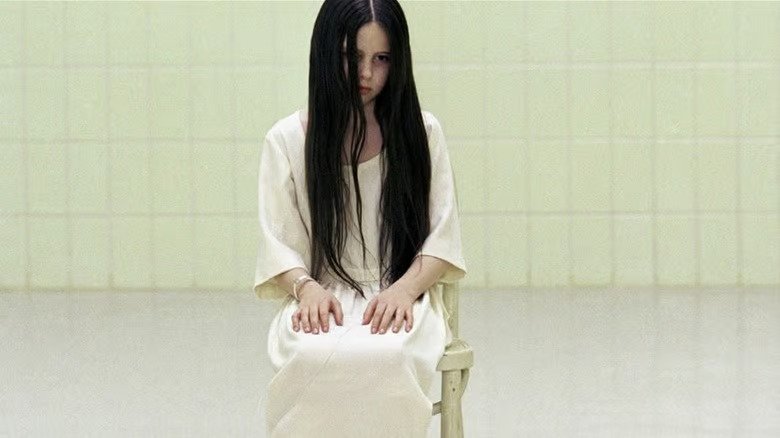
It is easy to forget today, when Japanese-American horror has been repackaged and categorized across virtually every streaming platform, just how much “The Ring” changed things in 2002. Before that film, ghosts in Hollywood looked very different. Samara Morgan, with her long black hair covering her face, unnatural movements, and performance built almost entirely around body language, created an image that became one of the most recognizable horror icons of the 2000s.
Daveigh Chase played the character who quickly became a cinematic horror legend. There are several scenes that horror fans who first watched the film as teenagers – including the writer of these lines – can still remember vividly today. One of them is, of course, the movie’s most famous sequence, in which Samara Morgan climbs out of the well and then emerges from a television screen, heading toward yet another victim.
Samara barely speaks throughout the film, yet Chase managed to create one of the most threatening characters audiences had ever encountered, relying on her expressions, movements, and frozen, inhuman body language. For most of the movie, we see Chase as the monstrous Samara, with only a few scenes showing the character as a younger, seemingly ordinary girl. It would be easy to argue that the film’s excellent makeup and special effects did much of the work, but in reality, this was a surprisingly complex performance, delivered impressively by an actress who was only 12 years old at the time.
Ironically, the role that made Chase famous was also the one that almost completely concealed her. Most viewers had no idea what the actress behind the character actually looked like, since Samara’s face is hidden by her long hair for much of the film. The result was an unusual situation in which one of the most recognizable characters in horror cinema became a cultural icon, while the actress who portrayed her remained relatively unknown.
Of course, Chase was not the only horror performer whose character became more famous than the actor behind it. The genre is full of similar examples. Most horror fans can recognize Robert Englund as Freddy Krueger or Brad Dourif’s voice as Chucky, but they don’t always know the actors behind the masks, heavy makeup, or elaborate monster costumes.
Even acclaimed performers such as Bonnie Aarons, best known for playing Valak, the Nun in “The Conjuring” Universe, and Javier Botet, who has become a specialist in portraying frightening creatures in horror films such as “Mama,” “REC,” and “The Woman in Black,” are recognized by their names or real faces mainly by dedicated genre fans. Chase also remained relatively anonymous to much of the audience, despite being much more than Samara and appearing in – or lending her voice to – several hugely influential films.
Produced on a budget of approximately $48 million, “The Ring” was a major box-office success, earning around $250 million worldwide. Chase received plenty of praise and even some significant recognition. In 2003, she won the MTV Movie Award for Best Villain, competing against some very big names: Willem Dafoe (Spider-Man), Daniel Day-Lewis (Gangs of New York), Colin Farrell (Daredevil), and Mike Myers (Austin Powers in Goldmember). The excite child Chase walked onto the stage to accept the award from P. Diddy – an appropriately horror-themed moment in retrospect.
The young actress initially struggled to speak, but when she finally did, she used Samara’s chilling voice to deliver a message: “I just want to say, ‘Everyone will suffer.”
Samara’s impact went far beyond the success of “The Ring” itself. In the early 2000s, she became one of the most recognizable symbols of the wave of Japanese horror that swept through Hollywood. Following the film’s enormous success, more American remakes of Far Eastern hits arrived, including “The Grudge,” “Dark Water,” and “One Missed Call.” Even people who had never watched these movies were probably familiar with the image that emerged during that period: a pale girl, long black hair covering her face, and unnatural body movements.
Samara was not the first character to look that way, but for Western audiences, she became the figure who turned that appearance into one of modern horror’s greatest icons. More than two decades later, it is difficult to think of another horror character from the early millennium who left a greater cultural mark.
In “The Ring Two,” released in 2005, Chase was still credited, but only through flashbacks and archival footage incorporated into the story. The same was true of the 2005 short film “Rings” and the 2017 movie “Rings.” In these appearances, she can be seen as the human version of Samara. The role was taken over by Kelly Stables in the second film – she had performed some of Samara’s stunts in the original – and by Bonnie Morgan in Rings. Nevertheless, Chase remains the actress most closely associated with Samara, and as it turns out, that was far from her only memorable contribution to cinema.

The Voice Everyone Knew Without Realizing It
Daveigh Chase was also a voice actress. Her most recognizable voice role was Lilo in the original “Lilo & Stitch,” Disney’s 2002 hit, which has quite a few frightening elements of its own. If you haven’t been around Earth in the last decades, this animated Disney classic follows a little Hawaiian girl who adopts a strange, destructive blue alien and treats him like a dog – With some creepy sides as well.
The contrast between the voice actress and the character she played was remarkable. In the same year children were afraid to be left alone in front of their televisions because of Samara, they also went to movie theaters to laugh and become emotionally invested in Lilo, without realizing the same girl brought both characters to life.
Chase voiced the character again in the spin-off “Stitch! The Movie” (2003), the television series “Lilo & Stitch” (2003–2006), and the television film “Leroy & Stitch” (2006). In 2003, she received an Annie Award for her voice performance, presented by the Hollywood branch of the International Animated Film Association.
In 2002, Chase also provided the English voice of Chihiro Ogino in the English-language version of Hayao Miyazaki’s “Spirited Away,” one of the greatest and most important animated films in history. In fact, at the 2003 Academy Awards, Lilo & Stitch and Spirited Away – two films featuring Chase’s voice work – competed against each other in the Best Animated Feature category. Ultimately, Spirited Away took home the Oscar.

Daveigh Chase Begins to Disappear
Looking at Chase’s four major films – “The Ring,” “Donnie Darko,” “Lilo & Stitch,” and “Spirited Away” – reveals a filmography that very few actors could boast about, especially before the age of 20. She also had several memorable television roles. Between 2006 and 2011, she played Rhonda Volmer in HBO’s “Big Love,” portraying a sociopathic teenager growing up in a polygamous family over the course of 32 episodes. It was a complex, dark role, far more mature than what most audiences had come to expect from her. In many ways, it was the clearest proof that Daveigh Chase was much more than “the child star from The Ring.”
It was also, apparently, the last significant television role of her career.
Unfortunately, Chase was unable to turn those early successes into an equally impressive adult career. As we will see, several deeply unfortunate factors may help explain what happened. We occasionally saw her in movies, including a few from our favorite genre. In 2016, she appeared in “Jack Goes Home,” one of her final acting roles. This independent psychological horror film was written and directed by Thomas Dekker. It follows a man named Jack, played by Rory Culkin, who returns to his childhood home in Colorado after his father is killed in a horrific car accident. There, he uncovers dark secrets about his family, his identity, and his past.
Daveigh Chase played Shanda, the protagonist’s loyal best friend, who accompanies him as he begins to lose his grip on reality. Critics described her performance as a mysterious presence that added to the film’s oppressive atmosphere, even though the role itself was relatively small. The independent production also featured several impressive names, including Britt Robertson, Nikki Reed, Natasha Lyonne, and horror legend Lin Shaye.
What Happened to Daveigh Chase?
Chase’s career gradually faded and eventually ended. In 2016, she starred in an independent thriller called “American Romance,” which remains, sadly, her final acting credit. After that, she did not take on any new acting roles, aside from archival footage of her as Samara in “Rings” (2017). As she stepped away from acting, her public appearances also became increasingly rare, and her social media accounts were effectively abandoned. Her last Instagram post was published in November 2017.
Chase’s story is not entirely unique. Hollywood has seen plenty of child stars achieve enormous fame at a young age, only to struggle to find their place again as adults. The transition from a famous child actor to an adult performer seeking new roles is often one of the most difficult stages of a career in the entertainment industry. In Chase’s case, it seems that this transition never really happened. Meanwhile, her personal life took an increasingly dark turn. Looking back, it becomes clear that the real-life horror story of her later years had already begun.
The Real Horror Story Of Daveigh Chase
The last decade of Daveigh Chase’s life was extremely difficult. According to reports, she received very few acting offers and was mostly limited to voice work in video games. She also faced a range of personal problems, from online bullying and a breakdown in her relationship with her family to substance abuse and severe weight loss.
In February 2017, Chase was questioned by police after bringing an unconscious young man suffering from an overdose to a hospital and leaving him there shortly before he died. She was not suspected of being responsible for his death, but investigators wanted to establish whether she had any connection to the incident.
In November of the same year, Chase was arrested and charged with a criminal offense after a routine check revealed that the vehicle she was riding in, although not driving, had been reported stolen. In August 2018, she was arrested again by the Los Angeles Police Department on drug possession charges. She spent a short period in a Hollywood jail before being released on bail. In the following months, she faced two misdemeanor charges stemming from these incidents: possession of a controlled substance without a valid prescription and possession of drug paraphernalia.
Reports about her final years painted a much darker picture than most people had known. According to her former manager, John Ryan, Chase spent a period living without a home in the Skid Row area of Los Angeles, one of the city’s most notorious neighborhoods and a well-known center for homelessness. Toward the end of the previous year, he reportedly received a video that has since been removed from social media. In it, Chase appeared extremely thin, with media reports estimating that her weight had dropped to a dangerously low level of approximately 75 pounds (34 kilograms).
In the disturbing video that made headlines following her death, Chase appeared, at least according to the reports, to be severely underweight. She could be seen writhing on the floor and struggling to stand.
Chase had disappeared from public view even earlier. According to Ryan, he and Chase’s stepsister hired a private investigator to locate her. They even managed to contact her by phone and determine where she was staying, but when they arrived – much like in a horror movie – she was already gone. These efforts are reportedly set to become the subject of a documentary titled “Finding Lilo.” Ryan said that several major Hollywood studios had expressed interest in the project, an interest that would presumably grow following her death.
“Daveigh was the sweetest, brightest light in Hollywood,” he said in tribute. “I can’t believe this is real. Her legacy and her work will live on forever.”
News of her death was shared by a man named Roy Hernandez, who identified himself as her partner and had launched a crowdfunding campaign in her name in the weeks leading up to her death.
According to the initial reports, Daveigh Chase was hospitalized in early June after suffering from malnutrition. Shortly before her death, Hernandez, who presented himself as her boyfriend, launched a “GoFundMe” campaign on her behalf. “Daveigh Chase, my girlfriend, has always been a light in my life,” he wrote. “But behind the scenes, she’s faced more than her share of hardship. After a difficult childhood and a painful falling out with her family, Daveigh was bullied and struggled to find safety and happiness in downtown LA.”
“When we met, I promised to protect her and give her the love and comfort she deserved. Together, we found moments of happiness and hope.” Hernandez wrote about her diagnoses with meningitis and several serious blood infections. “Recently, everything changed. Her condition has become critical, and the doctors have told me she may not have much time left. All she ever wanted was a place where we could live together, feel safe, and be happy. Now, more than ever, I want to give her that sense of home and peace in her final days.”
Chase died on June 16, 2026, at the age of 35. Initial reports attributed her death to complications involving bacterial meningitis and a serious bloodstream infection. However, the official cause of death was subsequently clarified by the Los Angeles County Medical Examiner. According to the medical examiner’s records, Chase died of acquired immunodeficiency syndrome (AIDS), with chronic polysubstance use listed as a significant contributing condition.
The Mystery Surrounding Daveigh Chase’s Death
Another unresolved question surrounded Chase’s final days: the identity and status of the man who had presented himself as her partner. Ryan, Chase’s former manager, publicly questioned Hernandez’s identity and his relationship with the actress. He claimed that none of her friends or family members had known him before he launched the crowdfunding campaign in her name.
According to Ryan, Chase had an official trust account established through the Screen Actors Guild (SAG), intended to cover all her expenses. In other words, even the final days of her life, and the person who initially reported the details to the public, were surrounded by unanswered questions.
There is something almost unbearable about the irony of this story. In a 2009 interview with Interview magazine, Daveigh Chase described what she wanted from her career in words that carry a different meaning today: “I just want to make something that I love and people will respect. I want to do things that will change someone’s life, not something they’ll forget about tomorrow.”
The irony is that she did exactly that, only most people never knew it was her. Daveigh Chase left behind an extraordinary legacy. Perhaps the saddest part of her story is that while Daveigh Chase’s characters remained etched into pop culture, the woman behind them was largely unknown to most audiences. She gradually disappeared from public view, until she became, in an almost poetic and frightening way, a “ghost” herself.
Because sometimes, just like in that unforgettable scene in which Samara crawls out of a television screen, horror can cross the boundaries of the screen and reach us in real life.